


 For all latest news, follow the Daily Sun's Google News channel.


China's spies set sights on AI semiconductors years before Nvidia scandal
Business Standard/NYT
Published: 23 Nov 2026, 06:05 PM
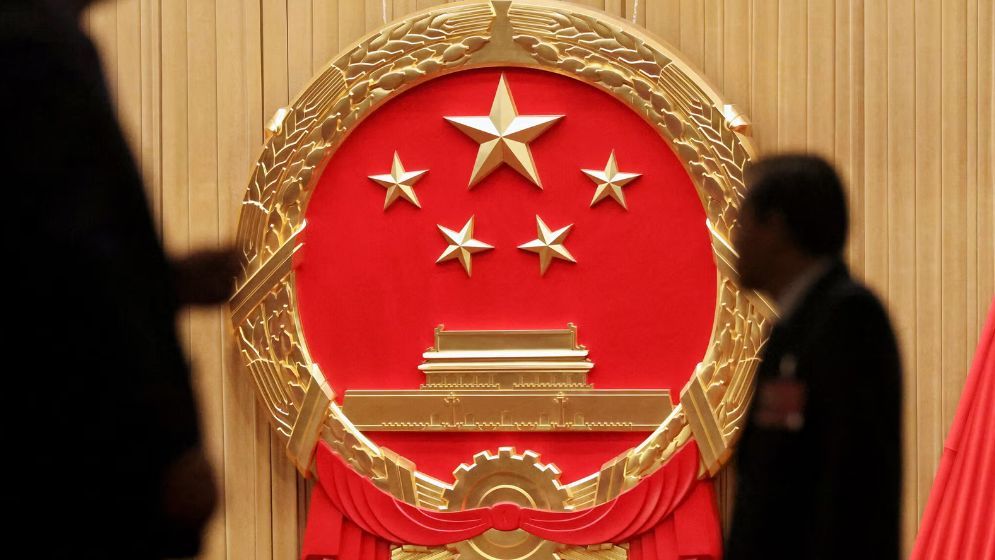
The campaign, details of which have not been previously reported, has been underway for at least two years. File Photo: Reuters
When China’s top espionage agency updated its priorities this year, it added a revealing goal: overcoming Western barriers to technologies that Xi Jinping sees as crucial to China’s rise.
At the heart of that quest are the advanced semiconductors needed to power artificial intelligence, including chips that the United States has barred US companies like Nvidia from exporting to China.
China must “adopt extraordinary measures to intensify the drive for core technologies in priority sectors,” Xi told the Politburo, a council of senior officials, in January, according to an official text of his speech. “As swiftly as possible, solve the ‘chokehold’ problems holding back development of future industries.”
The spy agency, the Ministry of State Security, has long been dedicated to eliminating threats to Communist Party rule in China. Now, it has made it a priority to acquire advanced semiconductor chips and gather intelligence about them, according to several serving and former security and intelligence officials from governments outside China in Asia, the United States and Europe.
How China’s spy agency is seeking to obtain advanced chips and intelligence about them has become a central question in the case of Alice Huang. She is a Chinese businesswoman whom US officials say the Chinese agency was working with to spy on Jensen Huang, the chief executive of the American chip giant Nvidia, allegations that were first reported by The New York Times.
Huang has not responded to requests for comment, and China has rejected the claims of espionage as “pure fabrication.”
The Chinese spy agency’s campaign to acquire chips, details of which have not been previously reported, has been underway for at least two years, according to the current and former officials. They spoke on condition of anonymity to discuss sensitive intelligence.
Among the campaign’s main elements:
- The head of the spy agency, Chen Yixin, who holds the title of minister of state security, created a working team that is leading the effort and reports directly to him, multiple foreign officials said. Chen has worked under Xi since they were officials in Zhejiang Province in eastern China, a cradle of China’s high-tech boom.
- The group was assigned to help China’s “counter-blockade” work — efforts to overcome export controls imposed by the United States and its allies.
- The campaign includes helping Chinese companies acquire and smuggle advanced chips into China.
- The group also collects intelligence about the semiconductor sector and its supply chains, according to several officials briefed on the campaign.
In April, Chen unveiled the new mission. “Deepen the struggle against blockades, and comprehensively advance artificial intelligence innovation, industry development, and applications,” Chen wrote in a Communist Party journal.
“Focus on tackling the ‘chokeholds’ of critical technologies,” he wrote, and solve the problem of technologies that “cannot be obtained by asking, buying or pleading.”
“Chen is signalling to the party leadership and his own ranks that his agency is elevating AI competition with the US as a long-term, top priority,” said Alex Joske, the managing director of security practice at Garnaut Global, a consultancy firm, who studies the Chinese security apparatus. “He is telling his officers to find more ways to wage this struggle.”
A Central Strategy
The ministry’s campaign is part of a wider push by the ruling Communist Party to overcome Western-imposed restrictions on critical technology. China is determined to close its gap with the United States in the computing capacity needed for progress in artificial intelligence.
At the top, that effort is being coordinated by the Central Science and Technology Commission. The commission is a secretive Communist Party organ that Xi established in 2023. This was not long after the US Commerce Department, in late 2022, started banning exports of Nvidia’s advanced chips directly to China, out of concern that the chips could help Beijing crack American encryption and design new weapons.
The party commission is ranked higher than ministries and is led by Ding Xuexiang, one of only seven members of the Communist Party’s Politburo Standing Committee, its inner circle of power.
“Computing power is a major indicator of overall national power,” Ding said in May when he visited energy and computing facilities in Beijing and nearby regions that are part of a planned nationwide AI computing network, according to Xinhua, China’s official news agency.
Xi created the commission to better marshal the country’s scientists, institutes, labs across ministries and companies for national priorities such as achieving technological self-reliance.
The commission rarely surfaces in Chinese news reports; its budgets and plans are not made public. But it has become an engine of Xi’s plans for technological pre-eminence, said Christopher K Johnson, a former Central Intelligence Agency analyst focused on China. The director of the commission, Ding, has long been a close aide to Xi and is also a vice-premier overseeing science and technology policy.
The Spy Agency’s ‘Anti-Blockade Struggle’
China’s espionage service and other parts of the government have for decades pursued technology and research from abroad, using both open and illicit methods. But under Xi, that effort assumed greater urgency, with more top-level coordination, including in artificial intelligence, several experts said.
Throughout this year, Chen, the agency’s chief, has repeatedly said the “anti-blockade struggle” is one of the key duties of China’s Ministry of State Security.
“Certain countries are going to every length to impose a ‘chokehold’ on China in fields of critical technology,” Chen wrote in a party journal last year. “Technology competition among the major powers has entered its most intense, most strenuous and most critical phase of close-quarters combat.”
As American companies, followed by Chinese ones, developed successively powerful AI models, officials in Beijing have increasingly recognised the potential for artificial intelligence to threaten their power at home and abroad, said Gregory C Allen, the founder and chief executive of Decision Tree Research, a firm that specialises in AI and other advanced technologies.
In September, Chen himself referred to US tech companies and their AI models — like Claude Mythos and GPT-5.5-Cyber — as examples of new cybersecurity threats, as he described the risks that AI posed to the party’s hold on power.
“China’s senior leadership understands that AI is critically, strategically essential, and that leadership in AI is obviously related to leadership in semiconductors,” said Allen, a former senior official at the US Department of Defense’s Joint Artificial Intelligence Center.
Chen became the state security minister in late 2022, and just over a year later, the ministry issued a warning that AI was “highly likely in the near future to profoundly transform the national security landscape.” In 2024, the ministry said that its officers were scoring successes against the attempts of “the United States and other Western countries to lock us in at the low-end” of technology.
The Role of Businesses and Other Groups
China has sometimes used front organisations or researchers to collect information about foreign AI technology, said Joske, the consultant.
“M.S.S. is very comfortable using business covers,” he said, “and it’s very comfortable running people as assets without directly telling those people that they’re working for the M.S.S.”
Such covers could include organisations ostensibly focused on academic research. In September, MI5, the British security agency, asserted that a Chinese research institute linked to the Chinese spy agency had drawn in British scientists for research that, apparently unbeknown to the scientists, “directly improves M.S.S. technical capability for espionage.”
Companies such as the one Alice Huang founded, Megaspeed, are viewed as another potential vehicle for gathering intelligence.
The precise nature of Alice Huang’s role in the ministry’s chip effort remains unclear. US officials say Huang, who was having an affair with the Nvidia founder Jensen Huang, passed information to Beijing about him. The US government is also investigating Megaspeed for illegally smuggling advanced chips into China.
Megaspeed, which is based in Singapore, bought billions of dollars of Nvidia chips and entered the business of providing high-end computing capacity to Chinese companies. Such services have allowed Chinese businesses to use Nvidia chips at data centres abroad by sidestepping US rules that ban sales of the most advanced AI chips directly to Chinese firms.
Last week, The Times also reported that Megaspeed was possibly aiding a lab with links to China’s military, through Alibaba, the Chinese internet giant. Alibaba is a customer and financial backer of Megaspeed. Providing Nvidia chips to support research for China’s military would be a violation of US law.
An Alibaba spokeswoman said: “Any suggestions that Alibaba provides services to the military is groundless. Alibaba Cloud’s service agreement strictly prohibits the use of our products and services for any military purpose.”
In an effort to address what many in Washington see as a loophole, the Trump administration announced on Monday that it would move ahead with a new rule to prevent China from being able to access advanced semiconductors from Nvidia and other US companies through the use of data centres outside China.
The new restriction will require overseas data centres to obtain a government licence before supplying “significant volumes of computing power” to firms with headquarters in countries on a list that includes China, Russia and Iran. It goes into effect in about 90 days.
The restriction could make China’s pursuit of self-reliance more urgent, a goal Xi has cast as a fight for survival, echoing the party’s revolutionary past.
“Like the Red Army on the Long March, we’re now on a new Long March,” he told technicians while visiting an AI data hub under construction in northern China last month. He was referring to a gruelling trek taken by Communist troops in the 1930s that cemented Mao’s leadership of the revolution. “You are an army in the drive for advanced technological self-reliance.”