


 For all latest news, follow the Daily Sun's Google News channel.


Pakistan: Drug firms face shutdown amid economic crisis
Medicine production in the South Asian nation has plunged by 21.5% in recent months
Jamila Achakzai, DW
Published: 27 Nov 2026, 09:02 PM
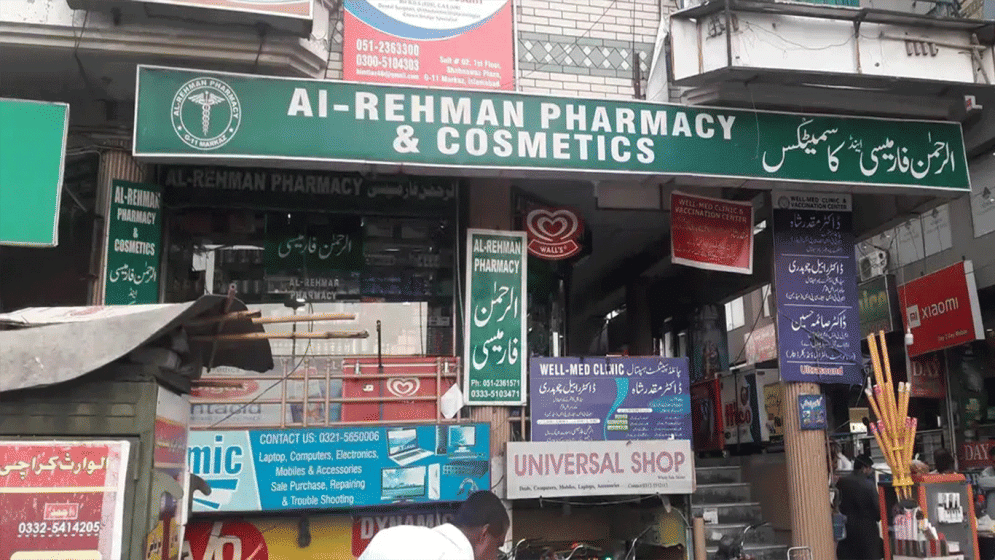
Photo: Collected
A pharmaceutical crisis in Pakistan is heating up amid a delay in releasing crucial bailout funds from the International Monetary Fund (IMF) to the tune of $1.1 billion (€1.03 billion).
Medicine production in the South Asian nation has
plunged by 21.5% in recent months–mainly due to the prolonged refusal of commercial
banks to facilitate the import of raw materials.
Syed Farooq Bukhari, chairman of the Pakistan
Pharmaceutical Manufacturers Association, told DW that the banks resumed
issuing letters of credit (LCs) in January this year as a formal guarantee to
pay for imports. But in light of low foreign exchange reserves, the banks only
granted around 50% of requests for the documents, which are issued to goods
importers guaranteeing payment within a fixed period.
Bukhari pointed out that granting 50% of LC requests
results in "medicine shortages as well as hoarding by wholesalers and
retailers."
IMF standoff
Officials blame the LC problem on the country's
alarmingly low foreign exchange reserves and insist that it will last until the
IMF released the $1.1 billion bailout tranche.
Last month, a team of IMF negotiators held talks
with Pakistani Finance Minister Ishaq Dar in Islamabad, but returned to the
United States without striking a deal to unlock the funds.
Most of the medicines and other pharmaceutical
products manufactured in Pakistan use imported raw materials, whose rates have
been driven up by the massive devaluation of the Pakistani rupee over the past
year.
The medicine retail prices are fixed by the federal
government on the recommendation of the Drug Regulatory Authority of Pakistan
(DRAP).
Faltering economy
But Prime Minister Shahbaz Sharif's administration
is not accepting the industry's request for a 38.5% across-the-board medicine
price hike, fearing a public backlash as inflation has already jumped to about
31.5%.
DRAP did recently approve a slight hike in the
prices of 19 medicines, including pain relievers and fever reducers–a move
rejected by the industry as insufficient.
Bukhari said the production of some pharmaceutical
products had become unfeasible as the value of the US dollar had jumped from
230 to around 270 Pakistani rupees in a matter of weeks, while fuel rates and
utility charges were also escalating.
"Four pharmaceutical MNCs [multinational
companies] have already left the country and another has gone for force
majeure, while 40 local companies have formally told us that they're heading
for a shutdown due to the unaffordable cost of production," he said.
He insisted that litigation had delayed relief on
medicine pricing to the industry.
Medicine shortage
Pharmaceutical companies have also complained that
scores of ships and containers carrying raw materials and medical devices
imported from China, Europe and the US are stuck at seaports due to payment
delays caused by dollar shortages on the market.
Pakistan's prime minister formed a committee two
months ago to look into the issues of the pharmaceutical industry but has yet
to meet medicine manufacturers. Meanwhile, the deepening crisis threatens
patient care as well as hundreds of thousands of jobs.
Shortages of medicines and pharmaceutical products
have been reported across Pakistan.
Muhammad Noor Mehar, chairman of the Pakistan Drug
Lawyers' Forum Chairman, pointed out that around 10% of imported lifesaving
medicines were in short supply.
He also claimed the unavailability of diabetes,
heart, renal and asthma medicines on the market and said that some imported
medicines and raw materials awaited clearance at ports.
Surgeries postponed
Doctors at the Federal Government Polyclinic–the
second-largest public-sector hospital in the capital city Islamabad–confirmed
medicine shortages and said they included Ketaconzole (fungal infection), Risek
injection (gastroesophageal issues), Vita 6 (tuberculosis), Treviament
(diabetes), Neuromet (anemia and nerve damage), and Herparin injection (blood
thinning).
Increasing Afghan child labour in Pakistan
An epilepsy patient, who requested anonymity, told
DW that the acute shortage of Tegral tablets used to relieve nerve pain had
driven her family from pillar to post.
"Though doctors have put me on alternative
medicine, it's really frustrating to see patient care being neglected so
callously by those at the helm," she said. "It's a pity that even if
you've got the money, it's not necessary that you'll get the required medicines
and treatment."
The Centre for Nuclear Medicine and Radiotherapy in
Quetta is the only cancer hospital in the southwestern Balochistan province.
Its oncologist and principal medical officer, Jamila
Shuja, told DW that the prices of almost all chemotherapy medicines had doubled
in a few months, and since most cancer patients were very poor, their medical
prognosis and treatment were badly affected.
"Injections Doxorubicin and Kopaque, which are
administered to cancer patients, aren't available at pharmacies, but they're
sold on the black market at rates 10 times higher than the notified ones,"
she said.
Muhammad Waheed, a salesman at Najeeb Pharmacy,
Islamabad, said Arinac (cold and sinusitis) and thyroid medicines had been out
of stock for a long time.
There are also reports that government hospitals
have postponed important surgeries due to the unavailability or shortages of
imported oxygenators, coronary stents, transplant kits and syringes.