


 For all latest news, follow the Daily Sun's Google News channel.


Opposition gets more time to discuss bills after note of dissent debate
Leader of the Opposition Shafiqur Rahman complained that insufficient time is provided to explain the background of giving a dissenting opinion
Daily Sun Report, Dhaka
Published: 09 Apr 2026, 04:01 PM
File Photo
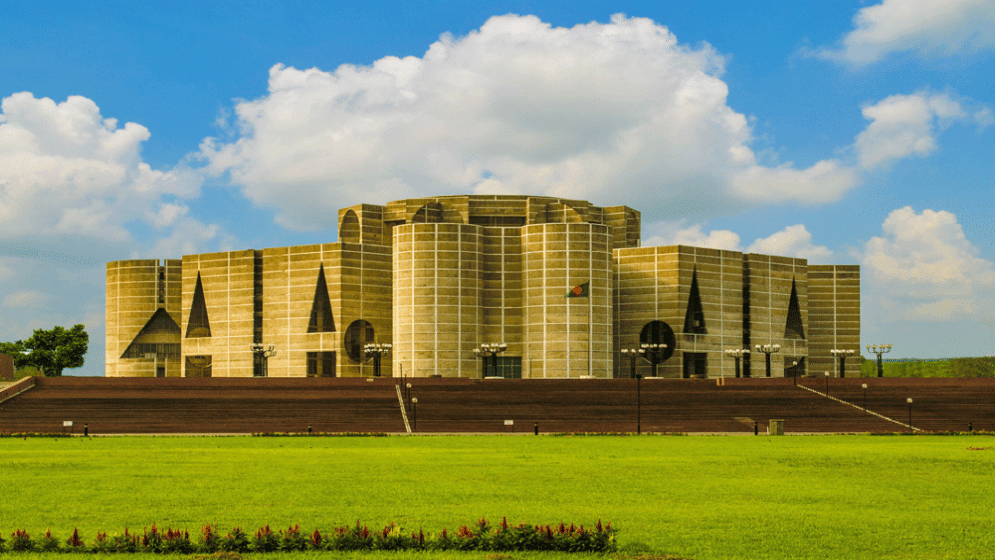
A debate took place in the National Parliament between the opposition and the government on Thursday over the allocation of time for the presentation and discussion of bills based on the special committee’s report.
The opposition strongly raised the issue, alleging
that insufficient time was being given to discuss bills on which a “note of
dissent” had been filed.
Responding to the opposition leader’s remarks, Home
Minister Salahuddin Ahmed said that many of the opposition’s points were issues
he himself wanted to raise. He explained that bills with differing opinions or
a “note of dissent” in the special committee’s report are being introduced in
stages in Parliament, and they must be finalised within the designated time
frame.
He added that under parliamentary procedure, those
raising objections are given the opportunity to speak, and this practice will
continue in the future.
The home minister added that one of the
objection-raisers had already been given the floor, and three times the normal
speaking duration was allowed. He further noted that opposition members could
still take advantage of the second reading and committee-stage amendments to
discuss the bills in more detail, while the time for the third reading is
comparatively shorter.
On the other hand, Leader of the Opposition Shafiqur
Rahman complained that insufficient time is provided to explain the background
of giving a dissenting opinion. He said, “It is impossible to raise any
significant points within just two minutes. Without the opportunity to explain
why dissent was filed and what amendments are needed, meaningful debate cannot
take place.”
He also argued that even though more time is
allocated for proposers, opposition members receive limited time, which
disrupts the balance of parliamentary debate.
The opposition leader added, “If proper time to
speak isn’t ensured in Parliament, what is the point of even being here?” He
demanded equal and sufficient time for both sides to ensure substantive debate
in the House.
At this point, the speaker intervened, noting that
according to past parliamentary practice, two minutes is generally allotted for
raising objections. However, in the current session, this was increased to six
minutes.
He further explained that members also have an
opportunity to speak during the committee-stage amendments, although time there
is limited.
Considering the opposition’s proposal as
“reasonable,” the speaker stated that the speaking time for objection-raisers
would be slightly increased in the future. He expressed hope that this would
allow for broader and more effective discussion of the bills.
Parliamentary sources said that continuous sessions
are underway to quickly finalise bills with differing opinions in the special
committee’s report. The pressure to pass these bills within the scheduled time
has created a somewhat hurried environment, leading to differences between the
government and opposition over time allocation.