


 For all latest news, follow the Daily Sun's Google News channel.


Jamaat ameer warns govt people could take to the streets to enact referendum verdict
Daily Sun Report, Dhaka
Published: 14 Nov 2026, 08:07 PM
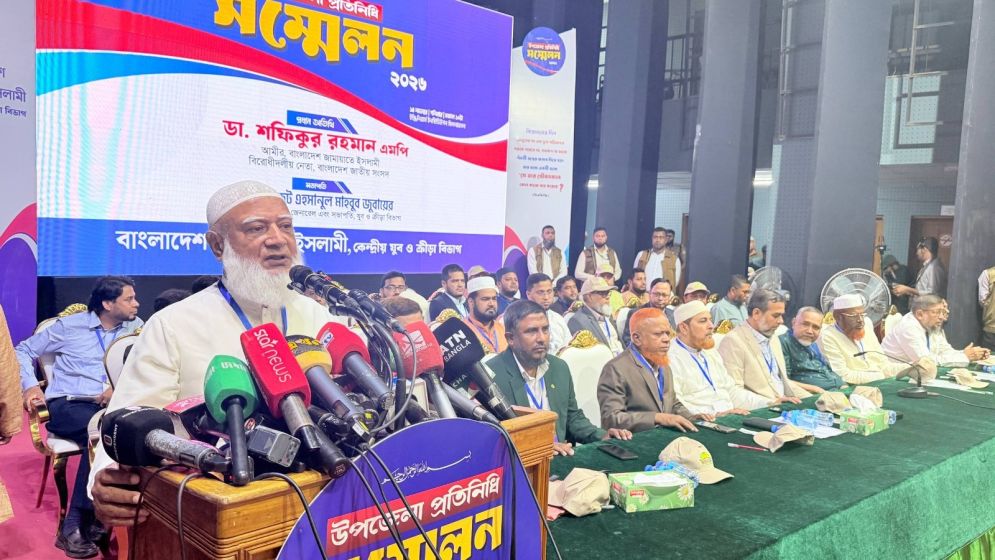
Photo: Courtesy
Jamaat-e-Islami Ameer and Opposition Leader Dr Shafiqur
Rahman on Saturday said the men and women activists of July Uprising wanted a
through revamp of the state apparatus, and not “simple constitutional
amendments” the government is pursuing.
People would take to the streets again amid the emergence of
“neo-fascism,” and no strength or weapon can stop them, Shafiqur warned the BNP
government, which he alleged was sidestepping state reform measures endorsed in
the February referendum.
The Jamaat leader made the remarks at a youth conference
hosted by the party’s youth and sports division at the Institute of Engineers,
Bangladesh in the capital.
Dr Shafiqur Rahman said the nation had repeatedly suffered
under oppressive forces but had risen again each time by defeating them. He
said the July Uprising, which he referred to as "36 July", was
achieved through the bloodshed of 1,400 young men and women.
The protesters had sought a radical overhaul of the entire
state system and justice in every sphere, he said. They wanted the state to
treat citizens based on fundamental rights and fairness.
He said the National Consensus Commission was formed to
reflect public and revolutionary aspirations and honour the bloodshed of
July-August 2024 uprising. Thirty-three political parties took part in the
process, which produced the July Charter.
Under the consensus, there were to be two elections — one to
form a government and another to reform or restructure the state, he said. But
after winning the election, the ruling BNP accepted one commitment and rejected
the other, betraying the agreement and creating the current crisis.
"We have said we will not accept this betrayal, and the
nation will not accept it either. The BNP must fulfil its promises. We will
ensure that the people's demand is met and will not allow it to be
abandoned," he said.
He accused the government of sidestepping the demand while
repeatedly calling for constitutional amendments.
He further said the referendum was not held to amend the
Constitution and that 70% of voters had not given their mandate for such
changes. If the BNP considered itself a democratic party, it could not
disregard the referendum results, he said.
In doing so, the BNP was effectively insulting the people,
undermining the electoral system and destroying public trust in the government,
he said.
"Those who shed blood to drive out fascism will not
allow a new form of fascism to take hold. We will continue our struggle against
it and will make no compromise with anyone in building a fascism-free
Bangladesh," he said.
The Jamaat ameer said fascism was a virus and anyone
displaying its symptoms could be described as fascist. He alleged that the
current government was showing many such symptoms.
He said Jamaat had taken to the streets with a seven-point
demand, including call for July Charter’s full implementation, and was
overwhelmed by the public support it had received. Its divisional rallies and
long marches had drawn widespread public participation, he said, adding that
the demands were not those of any particular party but of the people as a
whole.
The demands concerned citizens' voting rights and their
right to access medical treatment and healthcare, he said.
Dr Shafiqur Rahman said his party would not allow society to
be destroyed, accusing the government of pursuing a conspiracy against the
education sector.
He alleged that educational institutions were being occupied
as if they were disputed land, with BNP-leaning vice-chancellors, principals
and headteachers being appointed by force despite lacking the minimum
qualifications for their positions.
"To imagine that they will shape the future of our
children is to live in a fool's paradise," he said.
He also accused the government of handing over school,
college and madrasa governing bodies to party activists involved in violence
and extortion, while favouring teachers lacking merit and serving party
interests.
He said his party, Jamaat-e-Islami, did not want to give the
government another minute to harm the country. Warning the government, he said
people only needed to recognise the true character of those involved.
No force or weapon could prevail once the people were
united, as such power would become ineffective, he said, recalling the unarmed
movement led by young people in 2024.
"The power of the people bestowed by Allah is the
greatest force in the world. We honour and respect the organised strength of
the people bestowed by Allah," he said.
Jamaat Nayeb-e-Ameer Dr Syed Abdullah Mohammad Taher said
the revolution would be an Islamic revolution. “I am here today to meet you and
extend my greetings,” he said.
Jamaat Secretary General Mia Golam Parwar said the ruling
party was pushing Bangladesh’s youth towards moral decay and unethical
practices, undermining the very force needed to build the nation and the
country.
He said young people were being drawn into extortion, tender
manipulation, dealership rackets, mugging, juvenile gangs, occupation of river
ports, markets and slums, and drug abuse, distancing the younger generation
from the ideas, unity and strength needed for nation-building.
He said the nation was being pushed towards a crisis as the
public mandate -- expressed in the referendum held on the basis of the July
Charter, which in turn was achieved through the sacrifices and bloodshed of
hundreds of thousands of people -- was not being implemented.
“It appears that the government itself wants to push the
people back into conflict, the very conflict, bloodshed and violence from which
we sought to lead the nation towards a new Bangladesh. It is moving towards
one-party authoritarian rule,” he said.
He further said Jamaat-e-Islami wanted to save young people
from the destructive tide of extortion and land grabbing and help them become
God-fearing individuals who shun immorality and obscenity. They should emerge
as revolutionaries capable of transforming society, he said, adding that the
party had formed its youth and sports department to develop such young people.
Advocate Muazzam Hossain Helal said young people in
Bangladesh had made history in 2024, with the July-August movement involving
not only students but also young people from various professions, including
farmers, workers and small traders, as well as women.
He described the change in Bangladesh as the outcome of
another historic movement and called for developing Jamaat's grassroots youth
into skilled and capable individuals. He urged them to take the initiative in
building the foundation for future change.
Chhatra Shibir Secretary General Sibgatullah Sibga said
Bangladesh was facing a historic challenge and that the incumbent government
had failed to take effective measures to address the country's multiple crises.
He said the safety of those who took to the streets during
the July Uprising was under threat, while "killer Ziaul Ahsan" was
displaying arrogance at the tribunal. The government had failed to take
effective action against those responsible, he said.
He also accused Sheikh Hasina of conspiring against
Bangladesh from Delhi and said the Awami League was an Indian organisation, not
a Bangladeshi one.
Jamaat lawmaker Nurul Islam Bulbul said preparations must be
made for another inevitable revolution and a new government established that
would uphold and implement the aspirations of July.
He identified moral and character-related issues as the
biggest problems facing young people, saying they were overwhelmed by obscenity
and shamelessness.
Employment was their biggest challenge, he said, calling for government and private-sector initiatives to provide the necessary training and prepare young people for jobs.