



 For all latest news, follow the Daily Sun's Google News channel.


Pakistan air pollution cuts life expectancy by nearly four years
Report finds pollution causes 128,000 premature deaths annually, with Lahore residents facing a potential seven-year reduction in life expectancy
Daily Sun Report, Dhaka
Published: 29 Oct 2026, 12:19 AM
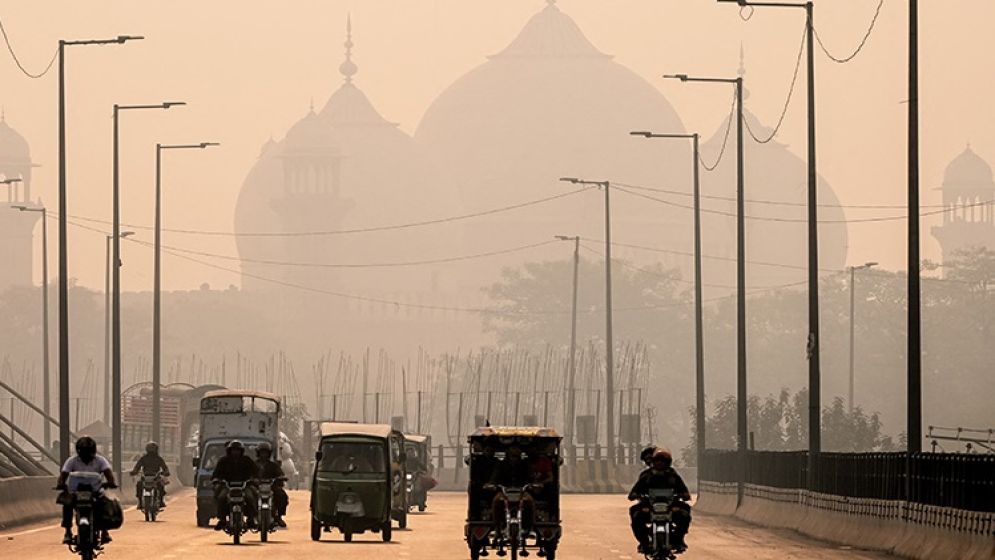
Commuters ride along a street engulfed in smog in Lahore, Pakistan, on 5 November 2024. © Arif Ali / AFP
Air pollution cuts life expectancy in Pakistan by an estimated 3.9 years and contributes to around 128,000 premature deaths each year, according to a report by the Pakistan Air Quality Initiative (PAQI), which also estimates that pollution costs the country the equivalent of 6.5 per cent of its gross domestic product (GDP).
The report warns that prolonged exposure to polluted air could reduce life expectancy in Lahore by up to seven years, highlighting the severe health and economic consequences of the country's deteriorating air quality.
Titled Unveiling Pakistan's Air Pollution: A National Landscape Report on Health Risks, Sources, and Solutions, the study presents Pakistan's first harmonised, multi-sector emissions inventory, alongside an assessment of air quality across several major cities. It also identifies the main sources of pollution and outlines measures that could cut emissions by up to 50 per cent.
The report examines pollution across four major urban airsheds: Lahore, Karachi, Islamabad–Rawalpindi and Peshawar. It assesses the contribution of different sectors to emissions in each area and identifies potential ways to reduce pollution.
The PAQI founder, who was part of the team that prepared the report, said the assessment drew on ground-based air quality measurements, satellite data and local activity datasets. These included fuel consumption, vehicle fleet composition, industrial records and estimates of emissions from different sectors.
The analysis covers fine particulate matter (PM2.5), carbon monoxide (CO), nitrogen oxides (NOx) and sulphur dioxide (SO2), providing a sector-by-sector breakdown of emissions across the four urban airsheds.
In Lahore, the annual average concentration of PM2.5 exceeds 110 micrograms per cubic metre, more than 22 times the World Health Organisation's annual guideline of five micrograms per cubic metre, the report says.
Long-term exposure to such high levels of pollution could shorten residents' lives by up to seven years. Winter temperature inversions make the situation worse by limiting the upward movement of pollutants and allowing polluted air to accumulate close to the ground.
Transport is the largest source of primary PM2.5 emissions in Lahore, accounting for 35 per cent of the total, followed by industry at 28 per cent and brick kilns at 17 per cent. Together, these sources contribute significantly to the city's particulate pollution, with winter weather further intensifying the problem.
Karachi has a different emissions profile, with industrial activity accounting for 49 per cent of emissions, according to the report.
Source: The Express Tribune